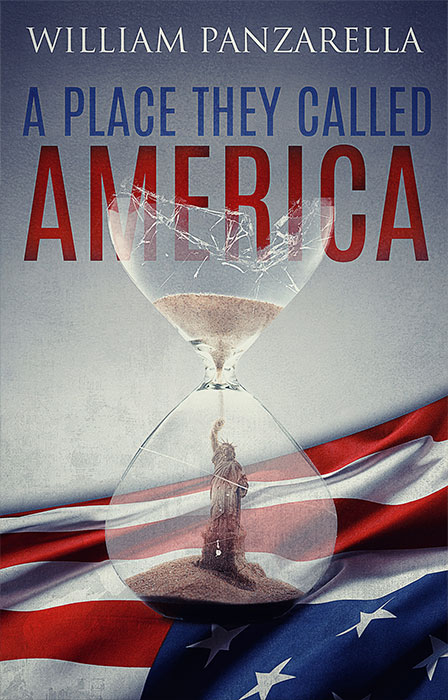
Frank and Mary were just about to walk into the eatery when up and down the main street, they could hear cheering. People began running excitedly out of the stores , and the cheering grew into a roar.
“I wonder what that’s all about?” Mary asked, as Frank opened the door to the restaurant.
But before they could enter, a middle-aged man ran out, practically floating on air. At first he passed right between Frank and Mary, almost knocking into them. But then he turned around to face them. “Can you believe it soldier!” he yelled excitedly, with a giant smile, as more people poured out of the establishment. “The war’s over!”
As Frank stood there, still clutching the handle of the door, he began to hear other people echoing the same sentiment. Mary asked the stranger what he meant—though it could mean only one thing.
“Truman just announced it! The Japs surrendered! The war is over!” With that, the man ran off.
Frank let go of the restaurant door and faced Mary. For a second, they just stood there staring at each other, as the sound of cheering continued to grow in the background. The war is over. Those words hung in the air and swirled through their minds. They both knew what it meant. Not only would no more young American men have to die in the Pacific, but Frank would not be called back to duty. He was home now, for good. Finally, they fell into each other’s arms, in a tight embrace.
“I can’t believe it’s actually over,” Mary happily cried into his shoulder.
God Bless America banned in various public schools. Not being able to say “Merry Christmas” in department stores. Crosses ordered taken down in front of courthouses and other public institutions. Fortune 500 companies defrauding veterans and their families and having only to pay a small fine. States telling you how much soda you can drink and soon, what kind of food you can eat. The Department of Justice suing individual states for enforcing immigration laws. The government taking money from its citizens and giving it to billionaires who bankrupt the country. The destruction of America is well under way—and it is not by any outside forces.
What no outside influences have been able to do since the colonies were first formed, our own government, aided by lawyers, lobbyists, and citizens that despise their own country, have accomplished. A century and a half ago, President Abraham Lincoln famously said: “America will never be destroyed from the outside. If we falter and lose our freedoms, it will be because we destroyed ourselves.” Sadly, his words proved prophetic. Like a metastasizing cancer, there is a tenacious and concerted effort from within to extinguish the very principles that America was founded on, and what countless brave servicemen and women have given their lives for since the American Revolutionary War.
But though eroding, We The People still have a voice and a will. Let us not sit idly by and be the first generation to wave the white flag. We must fight, not just for ourselves, but for our children and their children. Let our mark in history be one of triumph and the continuation of the American dream.
As we enjoy barbequing with friends and family this Memorial Day weekend let us remember all the servicemen and women who have sacrificed to allow us these simple freedoms.
Since America first sent troops to the trenches of Europe in 1917 to help its allies in World War I, over 624,000 U.S. troops have been lost. As alarming as that number is, we must remember that each one of these brave men and women had a family. They were someone’s son or daughter, someone’s husband or wife, someone’s brother or sister. Many of them left behind their own children.
The question I get asked the most is: how can we pay tribute to our veterans and help those that have recently returned home? First and foremost, if you run a business, hire a veteran. You will be helping your country and your business at the same time. There are also great and reputable foundations you can give to that are aimed at assisting veterans. You can also volunteer your time. But don’t underestimate the act of simply thanking a veteran for their service.
Though it is imperative that we support our troops still overseas and those that have recently returned home, it is important that we remember, honor, and understand all those who have served: from Fort McHenry to the Battle of Plattsburgh; from the trenches of Aisne to Belleau Wood; from the beaches of Guadalcanal to the beaches of Normandy; from the Chosin Reservoir to Heartbreak Ridge; from the highlands of Dak To to the jungle of Khe Sanh; from Fallujah to Kandahar; and countless other battlefields around the world.
As we enjoy ourselves this Memorial Day weekend, let us remember what is engraved on the Korean War Memorial in Washington D.C.: Freedom Is Not Free.
There was a time not too long ago that U.S. National Guard and Reserves were only called upon in times of extreme domestic unrest or natural disasters. Now, these men and women are being deployed on multiple combat tours overseas. Companies are reluctant to hire them, because they are afraid that they will be called to duty again at any time. But it is not just the Guard and Reserves. All branches of the military are now stretched to the max. Men and women are doing four and five tours and the time in between each tour is shortening.
But at the same time our brave men and women of the military–and their families–are sacrificing and being asked to do more and more, the Obama Administration is proposing $500 Billion in defense cuts. When people think of defense cuts they usually think there will be less ships and planes and tanks being built. But it also means closing bases and putting an even greater strain on an already stretched military.
In a time of great technological advances, let us not forget that it is still on the blood, sweat, and lives of those who wear the uniform that wars are fought and won.
I find it utterly disturbing and disgusting that I watched the news this morning and then while I worked out and not once did they mention that it was 67 years ago today that German General Alfred Jodl signed an unconditional surrender at General Eisenhower’s headquarters in Reims, putting an end to World War II in Europe. This country is forgetting its history!
Just think this, if you were 18 years old and landed in Normandy on D-Day, you would be 86 years old today. There are not many WWII veterans left and it seems the media couldn’t care less.
The year was 1941. America had managed to survive both the Great Depression and the Dust Bowl. Though the unemployment rate was still over fourteen percent, it was a far cry from its peak in 1933, when it reached the unprecedented rate of nearly twenty-five percent. Roosevelt’s New Deal appeared to be working. Across the vast Great Plains, the skies had finally reopened, quenching the dying land’s thirst, as the Dust Bowl refugees, as they had come to be called, started returning to their farms and homes. Across the nation, though there was still much work to be done, the feeling was that things were finally getting better. But new storm clouds were already on the horizon.
America was at peace, but she was an exception. For an ocean away, the world was already at war. Germany had already invaded and conquered Czechoslovakia, Poland, Denmark, Norway, and France. Great Britain was under relentless and devastating aerial attacks from the Luftwaffe and teetering on the brink of collapse. Beyond Europe, in China, the invading Japanese were committing atrocities. Several years had already passed since the Nanking massacre, when more than 300,000 people were slaughtered and countless women raped. The Italian Army had pushed into East Africa, taking Ethiopia and invading Egypt and was now at war there with British troops.
In America, notwithstanding a few muffled voices, isolationism was the mantra of the day. Though the government was already shipping supplies to Britain to aid in its struggle, the vast majority of adults, with the carnage of the Great War (and the Great Depression) still fresh in their memories, both deplored and feared the thought that distant winds of war could once again sweep them into action. Let Europe’s problems stay in Europe, the citizens clearly and loudly petitioned Roosevelt. What was happening in China and the small, obscure islands of Japan was hardy even an afterthought for most civilians.
But open-mindedness rests with the young and for the youth of America the idea of isolationism was not so cut and dry. Enter Frank Keller and Robert Davenport, best friends from Bayside, New York. Seven months away from graduating high school, they were on the precipice of a watershed moment, not only in their own lives, but of all history.
Now that the Knicks and Rangers are both in the playoffs I cannot help but reminisce about the last time they were both playing for their respective championships. It was June of 1994. Just twenty-three-years-old, I was on an Amtrak train from Arizona, where I had lived since I was ten, back to the place of my birth, New York. I was bent on leaving behind my wild and crapulous days to be a man and eventually take over my father’s business, a shopping center in Howard Beach.
My train pulled into Penn Station the evening of June 9, just as the Rangers had defeated the Canucks at Madison Square Garden in Game 5. I was weary from my three-day train ride and wanted nothing more than to go to sleep in a real bed. But the city was erupting with untamed jubilation.
Manhattan was still a cesspool of crime, graffiti, and seediness. People were terrified to walk through Central Park at night and Times Square was known more for peep shows than Broadway plays. Certainly, no one wanted to vacation in New York City. But all that was about to change.
As I settled into my new life, away from all the friends I had ever known, I was living in an office, which doubled as an apartment. Five day later, on June 14, the Rangers won the Stanley Cup for the first time since 1940. From city sidewalks of Manhattan to Brooklyn, from Staten Island to Queens, and in Howard Beach, people were celebrating in the streets as though we had just won a war. I watched from my second-story window and listened to the constant caravan of cars blowing their horns, which lasted into the early morning.
Several days later, on June 22, I watched as the Knicks tried to defeat the Huston Rockets in Game 7 to bring a second championship to the Garden. It was not to be. Still, the city was on the cusp of revival. Soon, crime would plummet, the streets would be cleaned-up, and Times Square would become the tourist Mecca it had once been long ago. I, too, felt as if my life was having a rebirth. Soon, I would be sitting on top of the world. But it was a fleeting moment. For New York and I would take different paths, as she continued to prosper and within a year I would find myself completely broke, without a job, and living on my brother’s couch. But the journey was just beginning.
I discussed this topic this morning on the Talk of Connecticut with Brad Davis.
According to a CBS News report, women make up about 8% of all veterans, or 1.8 million. Also according to the report, the number of female veterans without permanent shelter has more than doubled in the last half-dozen years and is continuing to climb. Of course, part of this is due to the overall high unemployment rate and homeless rate that our country is facing. But veterans, and specifically female veterans, face unique challenges.
The VA Inspector General found that nearly two-thirds of the housing facilities they reviewed did not provide adequate safety precautions for women, let alone women with small children. The government needs to provide more suitable housing for our female veterans, but they are expected to cut half a trillion dollars in military spending. Most people think that military cuts mean less aircraft carriers and planes, which it does, but there are also a multitude of veterans programs.
The VA has actually proposed a budget of $300 million for grants and technical assistance to community non-profits to help veterans stay in their homes. In comparison, the government gave over $700 billion to Wall Street in the form of bailouts.
Fortunately, where the government lacks, private foundations are helping our veterans. Final Salute Inc. is a foundation started in 2010 by a female veteran and cancer survivor to help female veterans find safe and suitable housing.
Our government and civilians owe it to the brave women–and men–who put their lives on the line (and in many cases gave their lives). Let us not forget them just because they have returned home. They still need our support.
On this day, April 9, in 1942, under the orders of Major General Edward P. King Jr., 12,000 American and 66,000 Filipinos surrendered to the Japanese at Bataan in the Philippines. It was the largest contingent of U.S. soldiers ever to surrender. What ensued would be forever known as The Bataan Death March.
Under the harshest and cruelest conditions imaginable the Japanese marched the prisoners for several days straight, toward Camp O’Donnell, a former Philippine Army camp. Between 7,000 – 10,000 people were killed on the march, before they ever reached O’Donnell. For those that survived the hell was far from over, as they would be routinely beaten, tortured and forced into labor at Camp O’Donnell, infamous Cabanatuan, and other prison camps.
By the time the Japanese surrendered, and the U.S. Army liberated the Bataan prisoners of war, two-thirds of the American prisoners had died.
Today, let us pause and remember those–both American and Filipino–who died during the occupation, as well as those who, against all odds, survived to see the end of the war.
I just recorded a half-hour segment with Glen Lewerenz of WLOL, Minneapolis, in which I go into depth about my newest book, American Horse. I talk about not only the story itself, but how it relates to what is going on today with our troops returning from Iraq and soon to be returning from Afghanistan. The segment will air this Friday, April 6 on WLOL at 10:30am EST.
Also Friday, I will be doing an interview with Barbara Dooley on WGAU, Atlanta, which will air at 8:45am EST.
As always, please get back to me with any comments or conversation. I read all comments posted to my blog as well as emails.
|
|